Move beyond the factory
Ableton Move can become the body of a different instrument. RNBO Takeover and Schwung, formerly Move Everything, offer distinct routes; choose around the performance you want.
Read the study ↗Leftfield sounds, expressive instruments and useful ways to make machines misbehave.
Open devices. Playable hacks. MPE, small computers and pictures that listen. A journal and a working studio, with room to find your own sound.
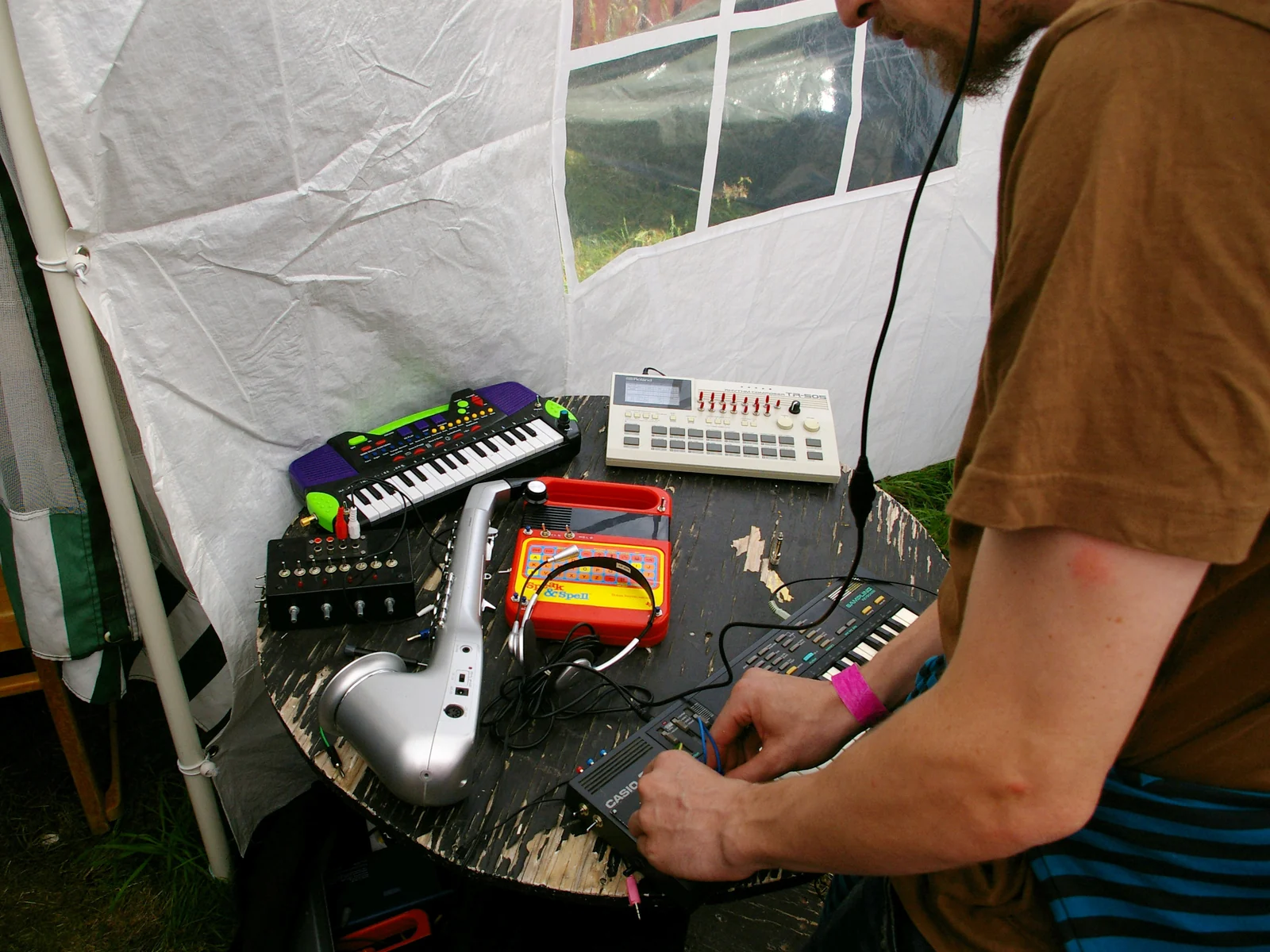
Open devices, small computers and useful alterations. Follow the signal, understand the constraint, then make the machine your own.
6 STUDIESPitch, slide and pressure as a playing language. Explore responsive patches, controller technique and instruments that keep each gesture independent.
7 STUDIESMagic, Hydra, TouchDesigner and the space between them. Build images that respond to phrasing, physical movement and silence.
10 STUDIESAudioWorklets, MIDI, recording and the details that make a browser instrument dependable. Small experiments you can understand and take on stage.
11 STUDIESSlow changes, unstable systems, hidden fields and found voices. Close listening becomes a practical way to discover what your own instrument could do.
Ableton Move can become the body of a different instrument. RNBO Takeover and Schwung, formerly Move Everything, offer distinct routes; choose around the performance you want.
Read the study ↗The M-VAVE FM-1 is a useful case study in extending affordable hardware: investigate the firmware, audition the idea, and make one musical change worth keeping.
Read the study ↗Four original instruments. Build a beat with harp, bass, drums, drone and voice, or open a patch, find a gesture, record what happens. Web Audio and MIDI, directly in your browser.
Enter the studio ↗A convincing standalone instrument begins with a clear role. Choose the audio path and physical controls before turning a small computer into a large unfinished project.
5 MIN READ / PRACTICAL STUDY
A web instrument earns trust through a clear signal path, honest connection states and a recording you can take away. The browser is a host; the performance still needs designing.
5 MIN READ / PRACTICAL STUDY
Use Magic Music Visuals to compose relationships between sound, gesture and image. A clear mapping can say more than a screen in constant motion.
5 MIN READ / PRACTICAL STUDY
Choose a hackable instrument by the work you want your hands to do. A board, an integrated kit and a modified finished device buy you different kinds of freedom.
5 MIN READ / PRACTICAL STUDY
MPE becomes musical when each gesture has a clear purpose. Start with one note, a small range and enough time to hear your hand.
5 MIN READ / PRACTICAL STUDY
Chaotic synthesis is most revealing in the territory between a stable note and noise. Give that territory a musical purpose before adding more motion.
5 MIN READ / PRACTICAL STUDY
Build a visual performance that follows phrasing, pressure and silence. Explore Magic, browser graphics and the space between a musical gesture and its image.
Audiovisual studies ↗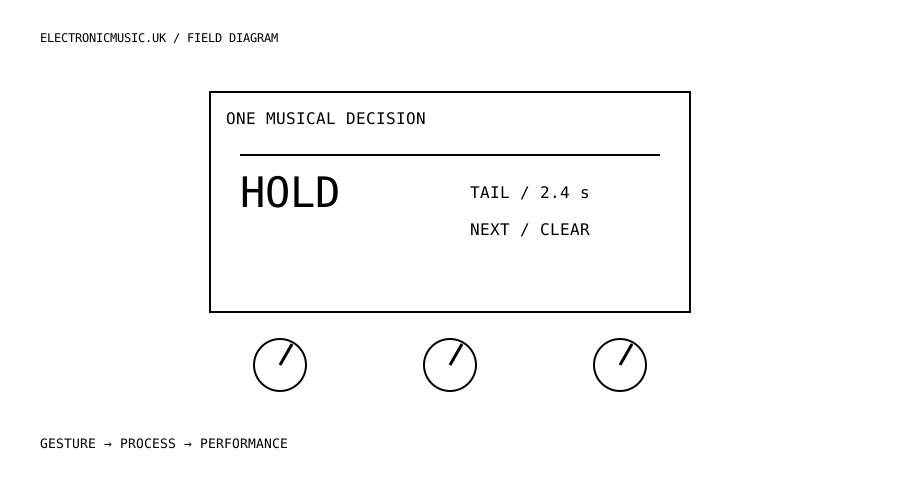 Hardware / RNBO
Build a small performance interface around one audible decision. RNBO User Views make the Move screen available to a patch, but useful information begins with the hands.
 MPE / Technique
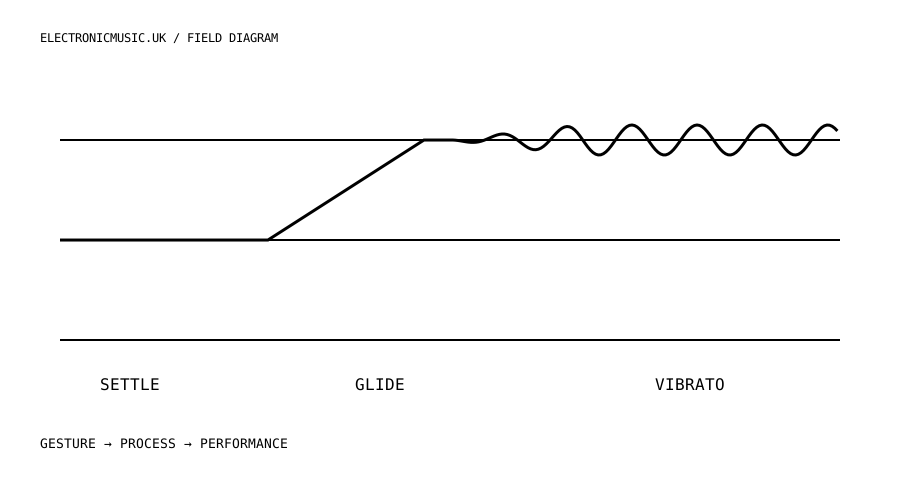
Separate calibration, pitch correction and musical intention. A short daily study can make slides and vibrato feel deliberate without flattening the character of an expressive controller.
 Web Audio / Voice
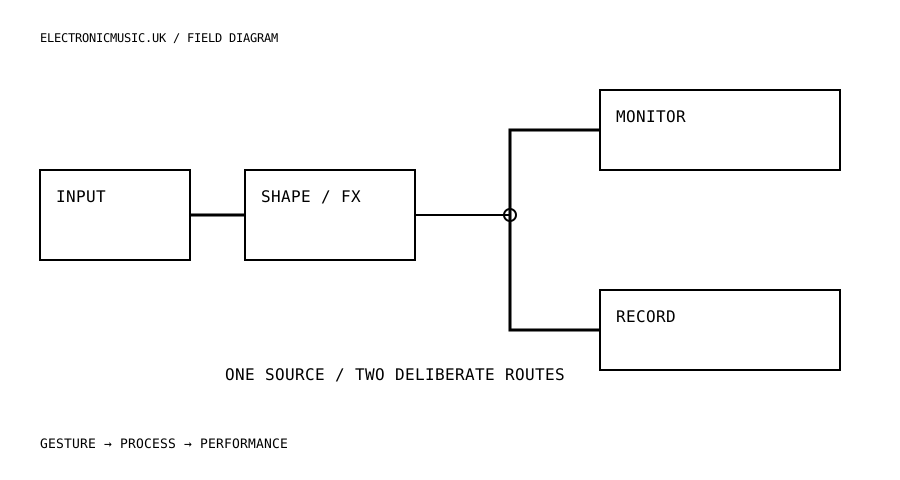
Design a browser voice path with clear input, monitoring and recording states. The first effect to understand is the processing that may already be happening before your patch receives audio.
 Audiovisual / Magic
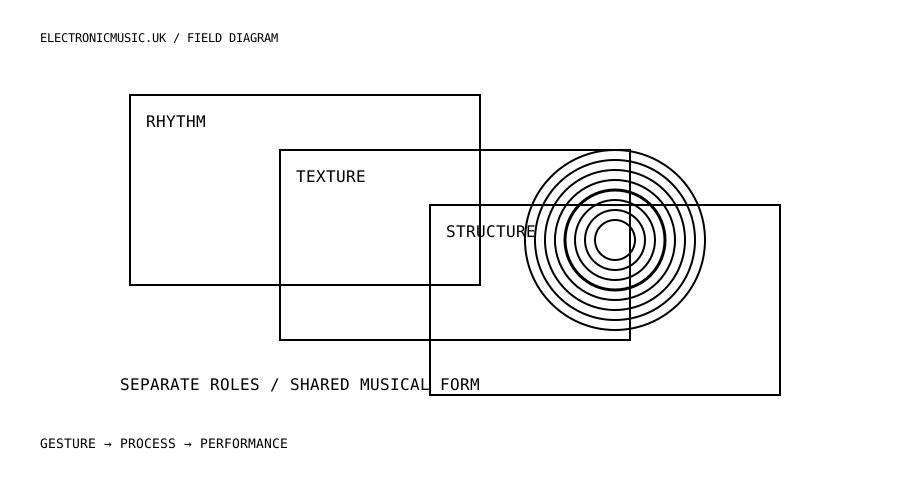
Build a visual set that distinguishes rhythm, texture and structure. With restrained mappings, Magic can reveal a performance’s shape without making every sound trigger the same movement.
Creator demonstrations of Move, standalone builds and expressive instruments. Context, sources and practical things to listen for.
Open the watch room ↗Colin Benders interprets Jon Hopkins’s Open Eye Signal on a modular synthesizer. Listen as an arrangement study: repetition can carry a piece while texture and intensity supply movement.
Make a four-minute study from one short pattern. Keep its notes unchanged and plan only three large changes: one in register, one in density and one in brightness.
ann annie’s modular reflection on Debussy’s Clair de Lune offers a contrasting study in melodic space and electronic timbre. Listen for the relationship between a recognisable phrase and its surrounding texture.
Choose a four-note phrase and play it once with a dry sound, then with a long tail. Leave enough silence for the second version to finish speaking before adding another note.
Share a changed device, a patch, a performance or a useful failure. Add your own photograph or a video link and explain what made the difference. Contributions are reviewed before publication.
Add your exploration ↗