electronicmusic.ukINDEPENDENT SOUNDS / OPEN POSSIBILITIES
The journal / MPE / 6 studies

Put the expression inside the note.

Pitch, slide and pressure as a playing language. Explore responsive patches, controller technique and instruments that keep each gesture independent.

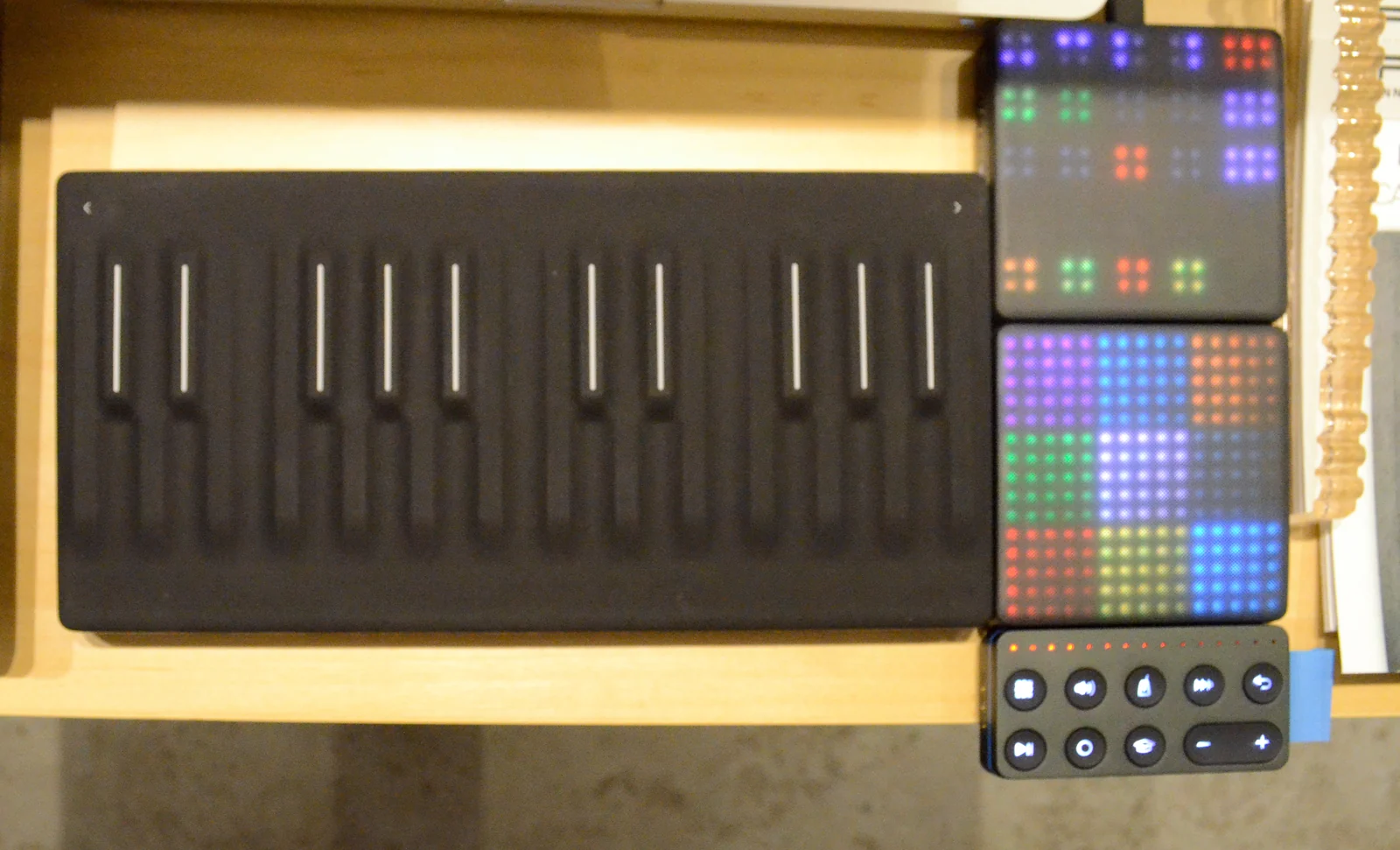
ROLI Seaboard Block, Loop Block and two Lightpad Blocks on a demonstration table.
Expressive surfaces at the Selector Pro forum in Kyiv, photographed in 2017. JTs / Wikimedia Commons · CC BY-SA 4.0. Resized / WebP.

MPE studies.

Search this section →
01
MPE / Technique

MPE intonation without fighting the surface

Separate calibration, pitch correction and musical intention. A short daily study can make slides and vibrato feel deliberate without flattening the character of an expressive controller.

4 MIN READ / PRACTICAL STUDY

02
MPE / Sound design

MPE: the note after you let go

Release stages and effect tails are part of the performance. Learn what happens when a finger leaves the surface, a voice is reused and a shared delay keeps speaking.

4 MIN READ / PRACTICAL STUDY

03
MPE / Expressive playing

A note is a place to move

MPE becomes musical when each gesture has a clear purpose. Start with one note, a small range and enough time to hear your hand.

5 MIN READ / PRACTICAL STUDY

04
Synthesis & gesture

At the edge of a tone

Chaotic synthesis is most revealing in the territory between a stable note and noise. Give that territory a musical purpose before adding more motion.

5 MIN READ / PRACTICAL STUDY

05
MPE / Recording

Keep the expression in the recording

The notes are only part of an expressive performance. Preserve the relationship between each note and its movement, then verify the result by listening.

5 MIN READ / PRACTICAL STUDY

06
MPE / Sound design

Design an expressive preset

MPE support is a connection feature. An expressive preset is an instrument design: its ranges, curves and shared effects must make sense under the fingers.

5 MIN READ / PRACTICAL STUDY
Watch the idea at work.

More films →
01 / Roger Linn

Playing Expressive Gestures on LinnStrument

Roger Linn demonstrates expressive playing gestures on LinnStrument. A useful reference for listening to articulation, slides and vibrato before designing a complex MPE mapping.

Try this afterwards

Choose one technique from the demonstration. Make a short recording with it, then change only one parameter and compare the result.

02 / Roger Linn

Creating LinnStrument MPE sounds in Surge XT

Roger Linn shows how to create Surge XT sounds that respond musically to LinnStrument and other MPE controllers. A sound-design companion to the gesture lesson, treating controller response as part of the instrument.

Try this afterwards

Start with an initial patch. Assign pressure to level and timbre to a modest filter change. Hold two notes and reshape only one; add effects after the independent response feels reliable.

03 / Expressive E

MPE: Demystified - creative tutorial #8

Josh Madoff explains MPE for Expressive E through playing examples, software and hardware setups, and different instruments. The MIDI Association also features this manufacturer-produced tutorial.

Try this afterwards

Record the same two-note phrase twice: first with fixed articulation, then with independent pressure and pitch movement. Describe the musical difference without using the word expressive.

From your workbench

What did you make of it?

Share a changed device, a patch, a performance or a useful failure. Add your own photograph or a video link and explain what made the difference. Contributions are reviewed before publication.

Add your exploration ↗
PASS IT ONEmailWhatsAppBluesky