electronicmusic.ukINDEPENDENT SOUNDS / OPEN POSSIBILITIES
The journal / Audiovisual / 7 studies

Give sound another shape.

Magic, Hydra, TouchDesigner and the space between them. Build images that respond to phrasing, physical movement and silence.

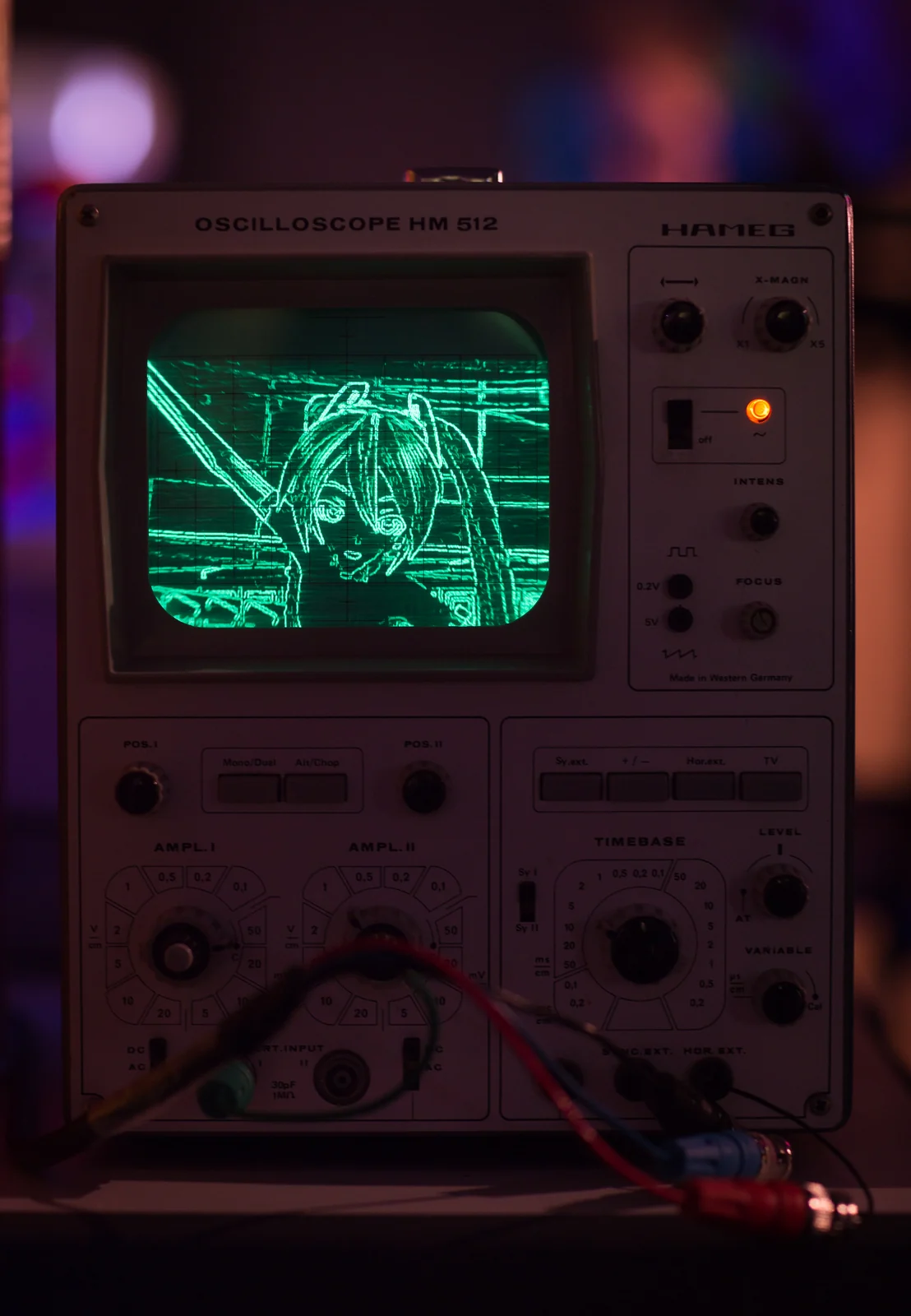
An analog oscilloscope displaying a drawn figure, with controls and cables below.
A hardware hack turns an oscilloscope into a drawing surface at 34C3 in 2017. Robert Anders · CC BY 2.0. Resized / WebP.

Audiovisual studies.

Search this section →
01
Audiovisual / Magic

Magic: three layers, one musical argument

Build a visual set that distinguishes rhythm, texture and structure. With restrained mappings, Magic can reveal a performance’s shape without making every sound trigger the same movement.

4 MIN READ / PRACTICAL STUDY

02
Audiovisual / Magic

Make the image play

Use Magic Music Visuals to compose relationships between sound, gesture and image. A clear mapping can say more than a screen in constant motion.

5 MIN READ / PRACTICAL STUDY

03
AV / Magic

Magic: one control, three related changes

Build a visual macro that has a recognisable musical purpose. A single well-shaped control can make a scene more playable than a panel of unrelated reactive parameters.

3 MIN READ / PRACTICAL STUDY

04
AV / Hydra

Hydra: feedback with an exit

Treat video feedback as a material with memory. Build an entrance, a stable region and a deliberate ending before increasing the complexity of a live-coded image.

3 MIN READ / PRACTICAL STUDY

05
AV / TouchDesigner

TouchDesigner: measure before you map

An audio-reactive patch needs a useful control signal before it needs a complex image. Inspect the measurement, shape its response and then decide what visual behaviour it deserves.

3 MIN READ / PRACTICAL STUDY

06
AV / Projection

Projection: compose for the surface

A projection patch becomes part of a room. Start with physical geometry and audience position, then decide what the image should do on that particular surface.

3 MIN READ / PRACTICAL STUDY

07
AV / MPE and gesture

Gesture visuals that remember the note

A visual response to MPE should know which gesture belongs to which note. Decide what remains independent and what becomes a shared image before connecting pressure to a parameter.

3 MIN READ / PRACTICAL STUDY
Watch the idea at work.

More films →
01 / Magic Music Visuals

Magic v2 Introductory Tutorial, part 1 (music visualizer / VJ software)

The vendor’s version 2 introduction to Magic’s modular visual workflow. Start with a small audio-reactive patch and build a visual instrument; menu details belong to the version shown.

Try this afterwards

Build one shape with one audio-driven parameter. Record the same phrase twice: first driving scale, then brightness. Keep the version that leaves the most room for musical contrast.

02 / MPLab

Olivia Jack || Live Coding Visuals with HYDRA

Hydra creator Olivia Jack presents live-coded visuals in the browser. An introduction to a video-synthesis language that can be performed and changed in public.

Try this afterwards

Make a three-operation Hydra patch: one source, one geometric transformation and one modulation. Perform for one minute by changing only a single number, then save the code beside the recording.

03 / Naoto Hieda

Hydra Advanced Tutorial: Feedback (2)

Naoto Hieda’s second advanced Hydra feedback tutorial. A focused companion to the introductory talk for studying how an image can become material for its own next frame.

Try this afterwards

Create a restrained feedback patch. Compare a slow scale change with a slow rotation, keeping the input unchanged. Find a setting where traces persist without filling the whole image.

From your workbench

What did you make of it?

Share a changed device, a patch, a performance or a useful failure. Add your own photograph or a video link and explain what made the difference. Contributions are reviewed before publication.

Add your exploration ↗
PASS IT ONEmailWhatsAppBluesky